
Women’s Networks at Work: Powerful, But They Can’t Do It Alone
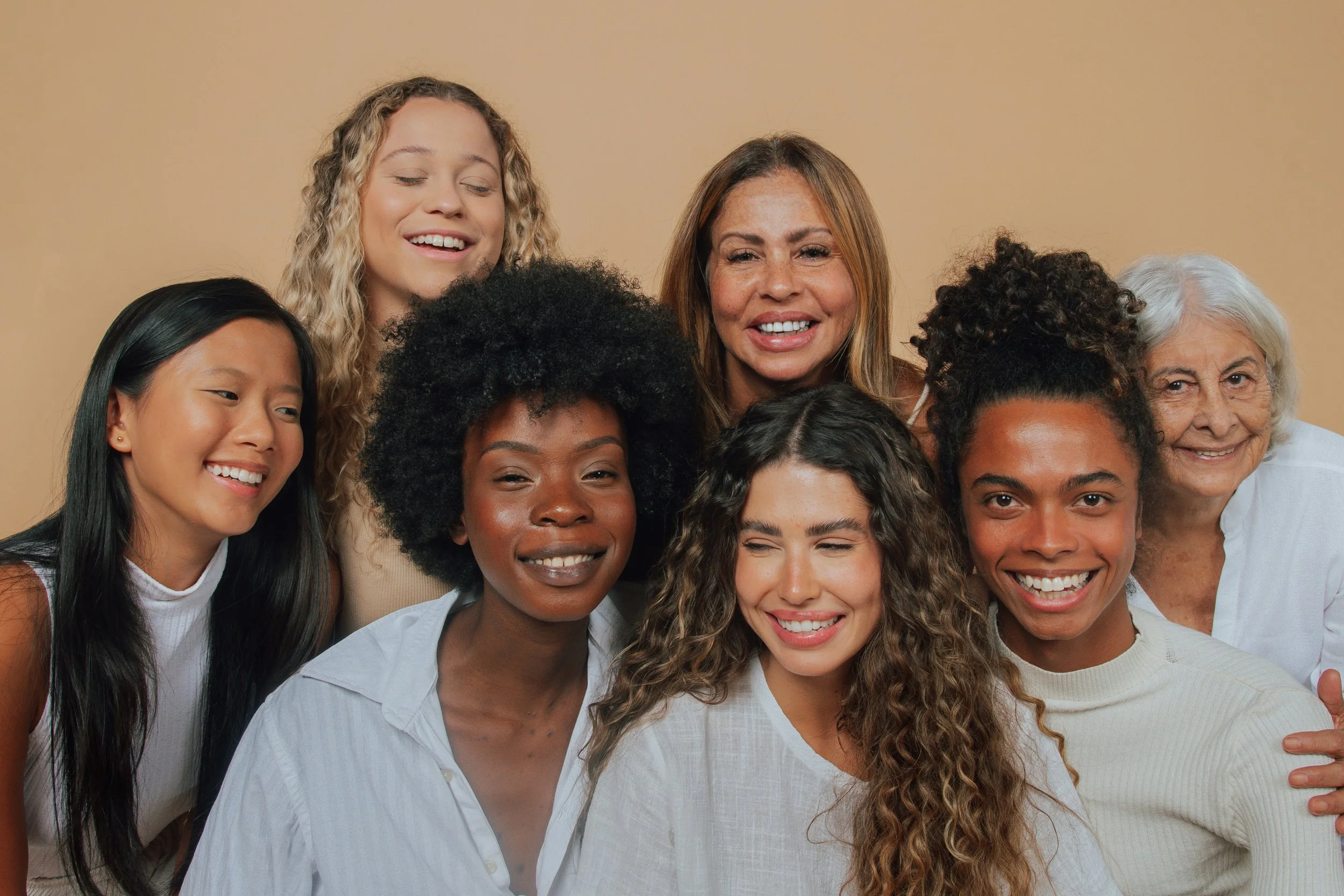
I am a big believer in women’s networks.
Over the past ten years, I’ve had the pleasure of working with and supporting many women’s networks, from those just getting started to well-established communities trying to work out what comes next. I’ve seen first-hand how powerful they can be when women have a space to connect, share experiences, learn from one another and build relationships beyond their immediate teams.
At their best, they can create something that is very difficult to manufacture through formal organisational programmes: connection. They give women a place to meet people they might never otherwise cross paths with, talk about experiences that are rarely discussed in everyday working life, share knowledge, build relationships and realise that something they thought they were navigating alone is actually much more common than they realised.
They can also be a brilliant source of insight for organisations. When women come together and start talking honestly about work, you hear things that might never appear in an engagement survey. You hear about the meeting where someone was talked over repeatedly, the manager who handled a difficult health conversation brilliantly, the promotion somebody did not apply for, the fertility treatment being hidden from colleagues, the return from maternity leave that felt far harder than expected, or the menopause symptoms somebody has been managing quietly for months.
That insight is enormously valuable.
But I think we need a little more nuance in the conversation about women’s networks, because there is a point at which celebrating their power can accidentally become an excuse for organisations to ask them to carry far too much.
A women’s network can be an important part of creating a better workplace for women.
It cannot be the strategy.
Women’s networks can create something organisations desperately need
There is good reason why employee networks have become so established in large organisations. Catalyst describes employee resource groups as voluntary, employee-led groups that help create inclusive working environments while supporting organisational goals, and networking itself can matter enormously for women’s careers. Women have historically had less access to some of the informal relationships, sponsorship and networks that can open doors to opportunity.
A strong women’s network can help close some of that gap.
It can connect someone relatively early in her career with women further ahead. It can create opportunities to hear how other people navigated leadership, parenthood, career changes or difficult working relationships. It can introduce women to colleagues outside their immediate team and create visibility across an organisation that might otherwise take years to develop.
And sometimes the value is much simpler than that. It is having a room, physical or virtual, where somebody says something you have been thinking for months and you realise, “Oh. It isn't just me.”
That sense of connection should not be underestimated.
The workplace can be surprisingly isolating when you are having an experience you think nobody else understands, and women's health is a good example of that. Someone might be dealing with PMDD, adenomyosis, endometriosis, fertility treatment, pregnancy loss or menopause without knowing anybody else in the organisation who has experienced anything similar.
A network can make those conversations possible, particularly around experiences that people may not feel comfortable raising elsewhere.
But I would be careful about describing women’s networks simply as “safe spaces”, because safety is not something we can guarantee just by creating a group and calling it safe. Psychological safety develops over time through trust, confidentiality, leadership behaviour and, perhaps most importantly, people’s experience of what actually happens when they speak honestly.
That is why I prefer the term “brave spaces”.
A brave space does not suggest that every conversation will feel comfortable or risk-free. It acknowledges that talking openly about health, identity, careers, discrimination or difficult experiences can take courage, and that people need to feel respected and supported when they do.
Women’s networks can create the conditions for more honest conversations, but that trust has to be earned. It comes from people seeing that confidentiality is respected, that different experiences are welcomed, that difficult conversations are handled thoughtfully and that speaking up does not come with negative consequences.
They can also tell you an enormous amount about your organisation
This is the part I think employers sometimes overlook.
Women's networks are not only communities. They can be incredibly useful sources of organisational insight.
If the same conversations keep appearing in a network, pay attention.
If women are repeatedly saying they do not understand how promotion decisions are made, that is useful information. If every menopause event generates stories about managers not knowing what to do, that tells you something about manager capability. If women returning from parental leave keep describing the same problems, perhaps the return-to-work process needs looking at.
Networks can help organisations spot patterns much earlier than formal data sometimes does.
The mistake is listening to those stories as individual anecdotes rather than asking whether they are telling us something about the system.
That is where a good network can move beyond awareness and start influencing meaningful organisational change.
But for that to happen, somebody outside the network has to be listening.
Where I think organisations get it wrong
One of the things I increasingly worry about is how much unpaid organisational work ends up sitting with employee networks.
A woman has a difficult experience with menopause, discovers there is very little support available and decides to do something about it. She creates a network, starts researching the subject, organises speakers, answers colleagues' questions, finds resources, talks to HR and becomes the person everyone contacts when they need help.
She is still doing the job she was employed to do.
She has just acquired another one.
Sometimes the work becomes substantial. People running networks can find themselves organising events, writing communications, handling budgets, gathering employee feedback, supporting colleagues through incredibly personal experiences and trying to influence senior stakeholders, often without protected time, additional pay or meaningful recognition.
I know women doing exactly this.
And I think organisations need to ask themselves whether they have become a little too comfortable benefiting from that goodwill.
Employee-led should not mean organisation-abandoned.
If a network is contributing to employee experience, retention, culture, talent development or organisational learning, then the work involved has value. At the very least, the people doing it should have time, resources, recognition and access to senior decision-makers.
Otherwise, we risk building important parts of workplace culture on the unpaid emotional labour of the people most affected by the issues we are trying to solve.
A network should not become the women’s health department
This matters particularly in women’s health.
I have seen organisations where the women’s network has gradually become the default home for everything related to women’s health. They organise the menopause session. They bring in a speaker for Endometriosis Awareness Month. They share resources about fertility. They set up peer support. They lobby for period products. They answer colleagues' questions.
Meanwhile, the wider organisation remains largely unchanged.
HR might have a policy. Wellbeing might fund a webinar. Occupational Health deals with individual cases. But the network becomes the place where women’s health actually lives.
That is a problem.
Women’s networks can absolutely help shape women’s health strategy. In fact, I think they should. They have access to lived experience and employee insight that senior leaders often do not.
But they should not be responsible for fixing the organisational systems that shape those experiences.
A network cannot rewrite an absence process on its own. It cannot ensure managers behave well. It cannot change healthcare benefits, promotion criteria or job design. It cannot create flexibility where senior leaders are unwilling to allow it.
Those are organisational responsibilities.
This is exactly why ownership matters. Women’s networks should have a voice in the strategy, not be expected to be the strategy.
The other risk is that networks become very busy without being very influential
Another thing I see is networks with packed calendars.
There is a speaker every month. There are newsletters, panels, coffee mornings, awareness campaigns and International Women’s Day events. All good things. But activity and influence are not necessarily the same thing.
A useful question for any network is: what are we here to change? What difference to we want to make?
Maybe the purpose really is connection and community, and that is completely valid. Not every network needs to become an internal lobbying organisation.
But if the ambition is to improve women's experience, progression or representation within the business, there needs to be a clearer connection between the network's activity and the wider organisation.
What does the network know that leadership needs to hear? Where are women getting stuck? What themes are emerging? What would make the biggest difference? Is anyone tracking whether those things change?
If the network has been talking about exactly the same problems for four years, another panel discussion probably is not the answer.
At some point, insight has to turn into action.
Career development needs to be part of this too
The original purpose of many women’s networks was closely connected to women’s progression, and I think that part deserves renewed attention.
The latest Women in the Workplace research continues to show that women receive less career support and fewer opportunities to advance, even though their commitment to their careers remains strong. Networks can help create relationships, visibility and access to people outside someone's immediate team, all of which can be valuable.
But again, we have to be careful not to imply that the solution to structural inequality is simply teaching women to network better.
Women do not need another programme telling them to become more confident, visible or ambitious while organisational systems remain untouched.
Networking, mentoring and leadership development can be incredibly useful, but they work best when they sit alongside fair promotion processes, sponsorship, good management and genuine access to opportunity. Catalyst's recent work on women's leadership development makes a similar point: progress requires changing the systems around women, not simply trying to “fix” women themselves.
A good women's network therefore creates opportunity while also helping the organisation understand what might be preventing women from accessing it in the first place.
Executive sponsorship can make a huge difference
This is probably one of the clearest differences between a network that has influence and one that remains at the edges of an organisation.
There needs to be a route to power.
An executive sponsor should not turn up once a year, say something supportive at an International Women's Day event and disappear again. Their role should be to help the network navigate the organisation, get important issues in front of decision-makers, unlock resources and challenge barriers the network itself does not have the authority to remove.
They can also help prevent the network from becoming isolated from the wider business.
This does not mean leadership should control the network. There should still be space for employees to shape the agenda and talk honestly about what they are experiencing.
But there is a significant difference between being independent and being unsupported.
The best relationship is probably somewhere in the middle: enough independence that employees have a genuine voice, alongside enough leadership involvement that somebody can actually do something with what they are saying.
Networks need proper resource, not just enthusiasm
If an organisation genuinely values its women’s network, that should show up in more than supportive words on the intranet. The people leading it need enough time, resource and recognition to do the work properly, whether that means protected time, administrative or project support, or simply being clear about how much can reasonably be expected of volunteers alongside their day jobs.
And that includes budget.
I am regularly contacted by women’s networks that are trying to bring in experienced speakers, facilitators or specialist support with almost no budget behind them. The network has been told that women’s health, development or inclusion matters, but the people actually trying to deliver that work are then expected to make it happen for next to nothing.
That is a difficult contradiction to ignore.
If an organisation wants a network to provide high-quality events, professional development, specialist education or meaningful support, it needs to allocate a realistic budget for that work. Otherwise, the message can quickly become: “This matters, but not enough for us to properly invest in it.”
That does not mean every network needs a huge pot of money, but the budget should be proportionate to the expectations being placed on it and the value the organisation says the network creates.
There is also a development opportunity here that organisations often miss. Running a large employee network can involve influencing senior leaders, public speaking, event management, communication, strategy, stakeholder management, facilitation and community building. These are valuable leadership skills, and they should be recognised as such in performance and development conversations where appropriate.
If someone is taking on that level of responsibility for the organisation, helping to shape culture and improve employee experience in the process, it should not disappear as invisible extracurricular work when promotion or progression decisions are being made.
Do not assume every woman wants to join
This is another reason I would move away from presenting women’s networks as the answer to everything. Not every woman wants to talk about her health with colleagues, and not every woman will want a women’s network to become a big part of her working life.
Some women will love the sense of community and connection. Others will have no interest at all. Some may turn up for professional development or networking events but avoid anything focused on health or lived experience, while others may value a private online community but have no desire to attend in-person events. All of those responses are completely valid.
For me, networks work best when they create opportunities rather than expectations. That becomes especially important when conversations involve health, identity or personal experience, because nobody should feel that being a woman means she is expected to share her story, educate colleagues or become an advocate for women’s health.
And the organisation’s responsibility does not disappear just because a network exists. Women who never attend a single event should still experience good management, fair progression, supportive policies and a workplace culture that works for them too.
So what does a genuinely thriving women’s network look like?
For me, it is not necessarily the one with the biggest membership or the busiest calendar.
It is one with a clear sense of purpose.
People understand why it exists. The people leading it have time and support to do the job properly. There is meaningful executive sponsorship. The network has a route into organisational decision-making, and leaders are willing to listen when uncomfortable themes emerge.
It creates connection between women but does not put the responsibility for gender equality onto women themselves. It contributes insight but is not expected to fix every problem it identifies. It creates opportunities for development and visibility while the organisation continues working on the systems that determine who progresses.
And, crucially, the people running it feel that their contribution is valued.
That is very different from setting up a Teams channel, recruiting some enthusiastic volunteers and hoping community will somehow create culture change on its own.
Women's networks are powerful. But what surrounds them matters more.
I still think a thriving women's network can tell you something positive about an organisation.
It suggests women want to connect. It creates visibility. It can strengthen relationships, build confidence, generate ideas and give women access to perspectives and experiences they might not encounter anywhere else in their working lives.
But I would no longer judge an organisation's commitment to women by whether it has a network. I would look at what happens around it.
Does leadership listen?
Are women progressing?
Do managers know how to support people well?
Are the people running the network recognised for their contribution?
Can the network influence policy and decision-making?
When women tell the organisation something is not working, does anything actually happen?
That is the more interesting test. Because a women's network can create community, but it cannot create an inclusive organisation on its own.
Nor should we ask it to.
Want your women’s network to create real impact?
At See Her Thrive, we help organisations strengthen women’s networks and turn them into a more meaningful part of the employee experience, while making sure responsibility for change does not simply fall onto the women running them.
We can help you clarify the purpose of your network, develop its leaders, build executive sponsorship, understand what women across your organisation actually need and connect network activity with your wider women’s health, talent and people strategy.
Whether you are starting a network from scratch or have an established community that has lost momentum, we can help you work out what comes next.
Get in touch to talk about how we can support your women’s network.